Photo tour
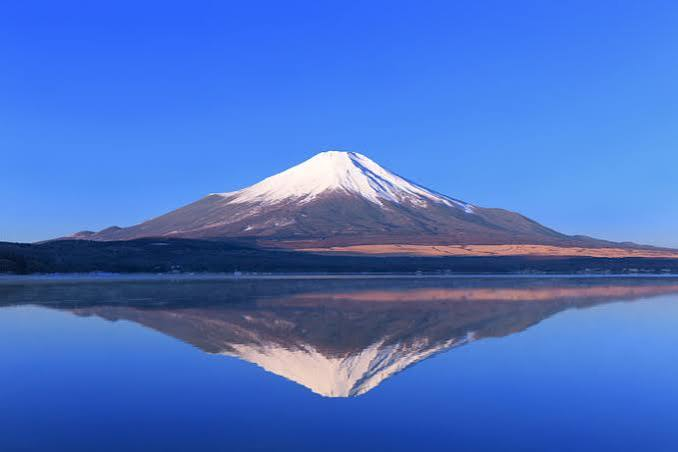
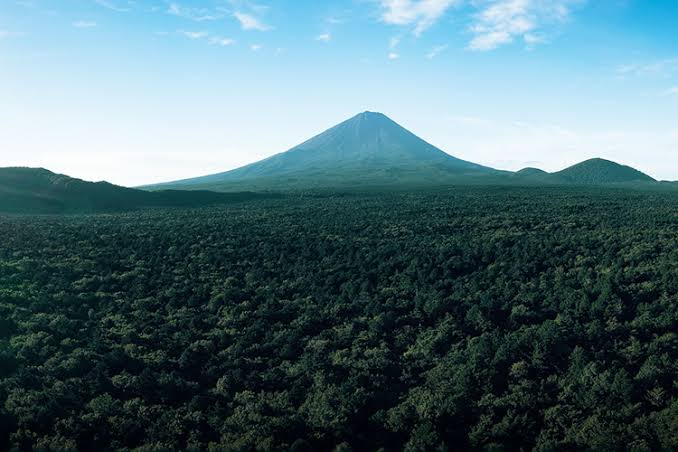
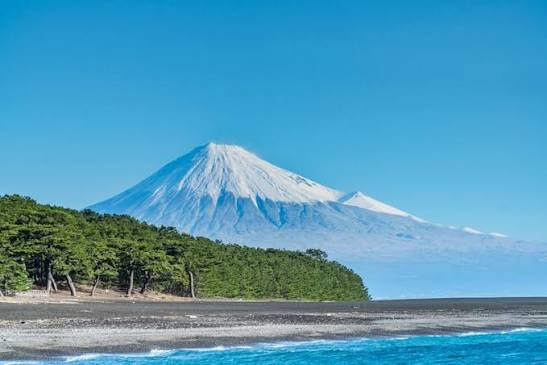
A few views of Mount Fuji
Some things words alone can't convey. Each photo also links to its related page.
Four keys to understanding Mt. Fuji
Mount Fuji isn't a single peak — it's a "mille-feuille" of at least four stacked volcanoes. The first key is the eruption record itself, from the Jogan eruption to the Hoei eruption. The second is the gifts of nature that eruptions left behind: the sea of trees, the caves, the spring water. The third is Fuji-ko, the mountaineering faith that swept Edo society, and the extraordinary people it produced. The fourth is the urban legends still told today, from the ownership of land above the 8th station to rumors about magnetic compasses. This site follows all four threads, page by page.
Explore the site
Each page stands on its own — start wherever interests you.
A four-layer volcanic mille-feuille. The Jogan eruption created the sea of trees; the Hoei eruption rained ash on Edo.
Read →A forest that grew over lava for a thousand years. Do compasses really go haywire? Myth meets geology.
Read →Spring water filtered for decades underground, Oshino Hakkai, and why major beverage makers build factories here.
Read →Wind caves, ice caves, lava tree molds — a hidden topography invisible from the surface.
Read →A mountaineering cult said to number 808 confraternities in Edo. The true story of an ascetic who fasted to death.
Read →Why it was registered as "cultural," not "natural," heritage — and the last-minute reversal over a pine grove 45km away.
Read →Who really owns the land above the 8th station? Phantom waterfalls, red Fuji, and rumors surrounding the caves.
Read →The first Japanese woman to climb in disguise, the British envoy who summited first, and the ascetic Kakugyo.
Read →Yoshida udon, Narusawa greens, rainbow trout — flavors raised by lava and spring water.
Read →Spots the major travel sites rarely feature, loved by locals, climbers, and researchers alike.
Read →Photo tour
Some things words alone can't convey. Each photo also links to its related page.
At a glance
The full stories are on each page — here's just the overall flow.
Explosive eruptions atop Komitake build up the Old Fuji volcano, laying the foundation of today's mountain.
Eruption style shifts from explosive to effusive lava flows, gradually forming the smooth, symmetrical profile we see today.
Massive lava flows bury and split the ancient "Lake Se," and over a thousand years a forest grows on the cooled lava — today's Aokigahara Jukai.
He secludes himself in the Hitoana cave (present-day Fujinomiya) and develops a unique system of practice that becomes the root of the Edo-era Fuji faith boom.
A new crater opens not at the summit but on the southeastern flank, raining volcanic ash as far as Edo. No eruption has been recorded since.
A Meiji government decree finally abolishes the ban on women climbing Mount Fuji that had persisted through the Edo period.
Registered as "Fujisan, sacred place and source of artistic inspiration," including not just the mountain itself but 25 associated component assets.