Home / Food & Specialties

09 — Food

Firm noodles,
and the reason for rich milk.

The food culture at the foot of Mount Fuji reflects its two defining traits — volcanic rock and spring water — directly in its flavors. Well-drained lava plateau soil raised a dairy region, and shaped a food culture of unusually firm noodles; cold, clear spring water raised rainbow trout and wasabi. We cover not just these local specialties, but the reasons behind them.

A bowl of Yoshida udon — firmness is the whole point

A Yamanashi specialty

Yoshida Udon — noodles said to be tough enough to "break your teeth."

"Yoshida udon," long eaten around Fujiyoshida City in Yamanashi Prefecture, is known for its extremely thick, firm noodles. In this area, farming historically coexisted with a thriving weaving industry — men doing the heavy work of kneading dough with real force, while women, busy at the loom, needed a quick meal to prepare, which is said to have settled into firm noodles with simple toppings. It's traditionally eaten topped with "suridane," a condiment made by grinding chili peppers and sesame seeds together.
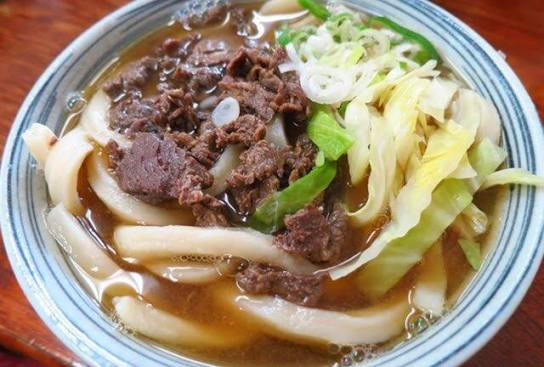
A bowl of Yoshida udon topped with beef and cabbage
Yoshida udonKnown for its extra-thick, firm noodles

A Shizuoka specialty

Fujinomiya Yakisoba — a maverick recipe that skips boiling the noodles.

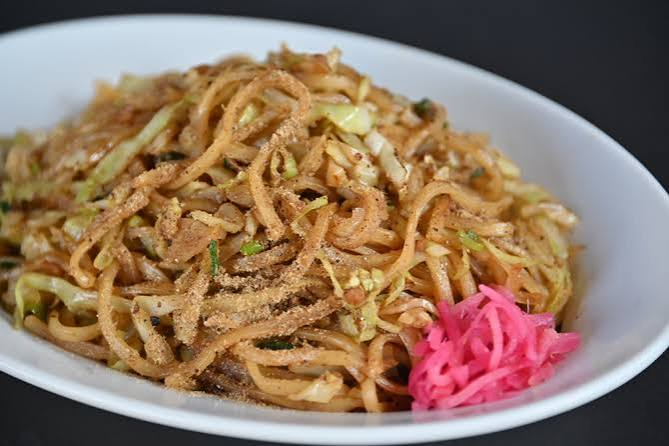
"Fujinomiya yakisoba," originating from Fujinomiya City in Shizuoka Prefecture, is one of Japan's most famous regional "B-grade gourmet" dishes. Its defining feature is a unique noodle-making process: rather than boiling the noodles like ordinary yakisoba after steaming them during manufacture, excess moisture is squeezed out and the surface is coated in oil. This gives the noodles a resilient, chewy texture that resists going soggy over time. It's traditionally finished not with bonito flakes but with "nikukasu" (fried pork back fat shavings) and "dashiko" (sardine flakes) — another point of local pride.

A plate of Fujinomiya yakisoba with pickled red ginger
Fujinomiya yakisobaPrized for noodles that resist going soggy

A gift of spring water

Wasabi and rainbow trout — thanks to cold, clear water.

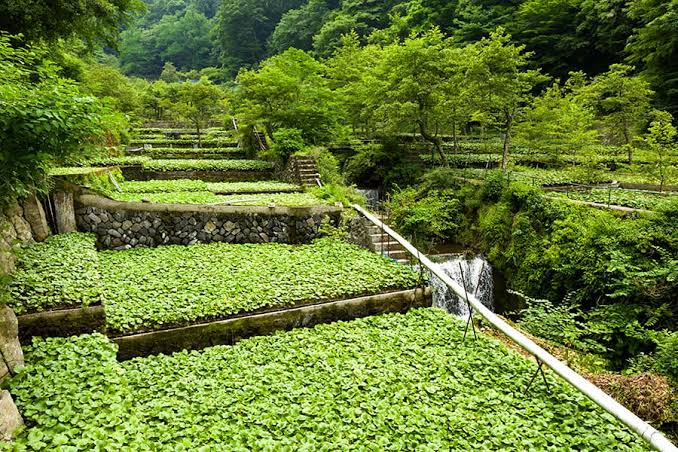
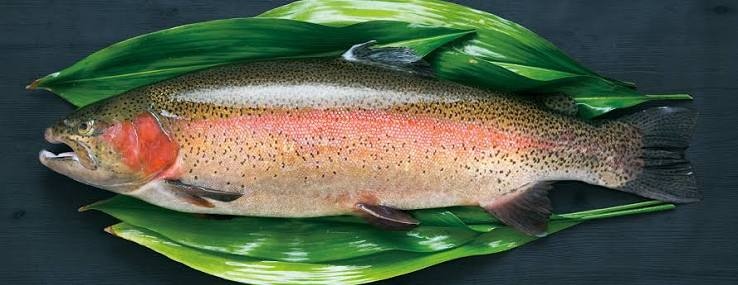
As covered on the "Gifts of Nature" page, Fuji's spring water maintains a stable temperature year-round. This trait has made the region ideal for growing wasabi, which is sensitive to temperature changes, and for farming cold-water fish such as rainbow trout. Both Shizuoka and Yamanashi Prefectures have long been dotted with wasabi paddies and fish farms fed by this spring water, serving up local dishes made from it. Many soba shops around Oshino and Lake Yamanaka also serve noodles made with Mount Fuji's own spring water.

Terraced wasabi paddies spreading across a hillside
Wasabi paddiesA spring-fed area at the foot of Mt. Fuji
Fresh rainbow trout laid on leaves
Rainbow troutRaised in cold spring water

A dairy region, unexpectedly

Asagiri Kogen — an unheralded dairy kingdom.

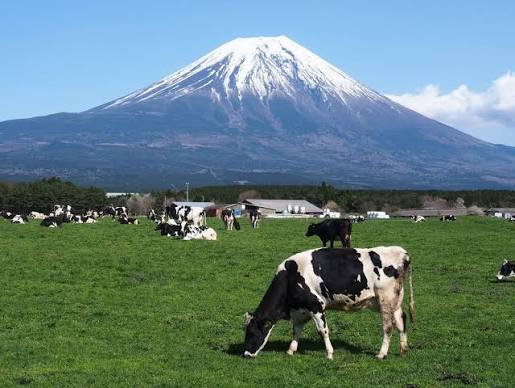
"Asagiri Kogen," a highland plateau spreading across the western foot of Mount Fuji in Fujinomiya City, Shizuoka, sits at the base of Mount Kenashi, on the opposite side from Fuji itself, and is actually known as one of Japan's leading dairy farming regions. Well-drained volcanic soil, morning and evening mist, and Fuji's abundant spring water together support the rich pasture that has long sustained excellent dairy cattle. It may seem unexpected given Mount Fuji's tourist image, but the soft-serve ice cream and cheeses made by local farms and dairy producers here are a beloved, connoisseur-grade specialty of the region.

Dairy cows grazing on pastureland with Mount Fuji in the background
The pastures of Asagiri Kogen and Mount FujiWestern foot of Fuji, Fujinomiya City

Next

After a good meal, go actually walk the foothills.

To close out this site, we introduce connoisseur-grade ways to explore the foot of Mount Fuji — the sort of spots the major travel sites rarely spotlight.

Read For the Connoisseur →